The Official Home of Mediocre Screenwriter Geoff LaTulippe

Congratulations. You just got dumber.
Twitter RSS

Hit Counter provided by Skylight

EMAIL GEOFF

Do it. I want your questions about screenwriting. Or the film industry. Or anything. [email protected]

Recent Posts

  • COQ AU VIN: A RECIPE, A CONFESSION, A PAEAN
  • A SEMIAUTOBIOGRAPHICAL ACCOUNT OF THE HOLIDAYS
  • THE LADY IN YELLOW, SHE WALKS
  • HOW ONE OF THE VERY BEST MOVIES OF 2017 BROKE ME AND THEN PUT ME BACK TOGETHER
  • CHARLIE’S STORY

Terrible Things People Say to Me

  • Jamie Vann Struth on GEOFFREY’S FAVORITE FILMS OF 2013
  • Murjani on THE LADY IN YELLOW, SHE WALKS
  • Dianne Watts on THE LADY IN YELLOW, SHE WALKS
  • Shirley Vogelsong on THE LADY IN YELLOW, SHE WALKS
  • Mary Markel on THE LADY IN YELLOW, SHE WALKS
  • Screenwriter Geoff LaTulippe On The Big Sick « Movie City News on HOW ONE OF THE VERY BEST MOVIES OF 2017 BROKE ME AND THEN PUT ME BACK TOGETHER
  • Daniel S. Duvall on SO…LET ME CLEAR UP SOMETHING I’VE ALWAYS BEEN REALLY SUPER CLEAR ABOUT
  • DrGMLaTulippe on THAT TIME WHERE I TAUGHT YOU HOW TO COOK THE PERFECT STEAK
  • James Dolan on THAT TIME WHERE I TAUGHT YOU HOW TO COOK THE PERFECT STEAK
  • Sayonara, Summer! | Mumblings & Musings of a Rookie Screenwriter on MEET THE SELECTED TEN!
  • Set Speed to Warp for #SixWeekSpec! | Mumblings & Musings of a Rookie Screenwriter on WANT TO WRITE A SCRIPT IN SIX WEEKS? JOIN THE #SIXWEEKSPEC CHALLENGE!
  • DrGMLaTulippe on LET’S TALK A LITTLE BIT ABOUT “WRITE WHAT YOU KNOW”
  • John Maudsley on LET’S TALK A LITTLE BIT ABOUT “WRITE WHAT YOU KNOW”
  • Rustin Niles on LET’S TALK A LITTLE BIT ABOUT “WRITE WHAT YOU KNOW”
  • Screenwriter Geoff LaTulippe Takes On “Write What You Know” « Movie City News on LET’S TALK A LITTLE BIT ABOUT “WRITE WHAT YOU KNOW”
  • Tara on MY TOP TEN MOVIES OF 2014
  • JP on A RESPONSE TO JEANNE V. BOWERMAN AND SCRIPT MAGAZINE
  • Davd R on A RESPONSE TO JEANNE V. BOWERMAN AND SCRIPT MAGAZINE
  • DrGMLaTulippe on A RESPONSE TO JEANNE V. BOWERMAN AND SCRIPT MAGAZINE
  • Sarah Beach on A RESPONSE TO JEANNE V. BOWERMAN AND SCRIPT MAGAZINE
  • Mike C. James on A RESPONSE TO JEANNE V. BOWERMAN AND SCRIPT MAGAZINE
  • DrGMLaTulippe on A RESPONSE TO JEANNE V. BOWERMAN AND SCRIPT MAGAZINE
  • Mike C. James on A RESPONSE TO JEANNE V. BOWERMAN AND SCRIPT MAGAZINE
  • DrGMLaTulippe on A RESPONSE TO JEANNE V. BOWERMAN AND SCRIPT MAGAZINE
  • ShanR on A RESPONSE TO JEANNE V. BOWERMAN AND SCRIPT MAGAZINE

Archives

  • June 2018
  • December 2017
  • November 2017
  • September 2017
  • October 2016
  • September 2016
  • January 2016
  • December 2015
  • May 2015
  • March 2015
  • January 2015
  • October 2014
  • September 2014
  • August 2014
  • July 2014
  • June 2014
  • May 2014
  • March 2014
  • February 2014
  • January 2014
  • December 2013
  • November 2013
  • September 2013
  • July 2013
  • June 2013
  • May 2013
  • March 2013
  • February 2013
  • January 2013
  • December 2012
  • November 2012

Categories

  • Uncategorized

BRB

Sep06
by DrGMLaTulippe on 06/09/2016 at 2:51 pm
Posted In: Uncategorized

I’ll be right back.
A sturdy promise
That covers all the bases.
Romantic expectation.
Murderous anticipation.
Damning self-medication
And other haughty phrases.

I’ll be right back.

A lie we tell to others.
A truth we sell ourselves.
It’s a fundamental feeling.
It’s a complicated fleeing.
It’s a confidential reeling.
We pluck from mental shelves.

I’ll be right back.

But will I be?
Oh look, I’ve overthought.
How about we don’t.
Please say you won’t.
It’s unbeknownst
What point it is I’ve sought.

I’ll be right back.

But not…return the same?
Congrats, so esoteric!
Why try so hard
To spin this yarn
That ends in yawns.
It borders on barbaric.

I’ll be right back.

Let’s tap the brakes.
I think perhaps I’ve erred.
My perceptions are erratic.
My conclusions melodramatic.
Maybe doubt is automatic.
I’m not sure I’m even scared.

I’ll be right back.

The results are in.
Just my imagination.
I’ve poorly analyzed.
I sincerely apologize.
For filling up your busy eyes
With this plodding imitation.

I’ll be right back.

And there it is.
The concept now alight.
I’d missed the point.
I’m back in joint.
I’ll now appoint
Myself to be back right.

 Comment 

SO…LET ME CLEAR UP SOMETHING I’VE ALWAYS BEEN REALLY SUPER CLEAR ABOUT

Jan20
by DrGMLaTulippe on 20/01/2016 at 5:51 pm
Posted In: Uncategorized

Earlier today on Twitter I began soliciting screenwriting questions for THE BROKEN PROJECTOR’s new and blithely awesome Vomit Draft podcast companion (enjoy the utter subliminality of that shameless plug). And in doing so it occurred to me that, while I’ve been as clear as possible that I believe that There Are No Rules When It Comes To Screenwriting, I haven’t been entirely clear about the scope and parameters of what “there are no Rules when it comes to screenwriting” means.

Let’s back up for a second, define it a little better, and then examine why there are, indeed, some “Rules” that matter.

When we (professional/experienced screenwriters like myself and others who taught and/or agree with me) talk about there being No Rules in screenwriting, this is more of a philosophical statement that applies to how you should think about storytelling in the screenwriting medium. It’s a testament to the freedom you should feel to tell the tales you want to tell in exactly the way you want to tell them. To not feel as though you should have to compromise your art because of what you might believe The Rules are. It’s easy to track script sales and see three movies a weekend and read the screenplays that wind up on The Black List and talk yourself into the notion that there is a set of standards you should follow and a certain way you should compose your own work. And while that might be comforting in some ways, it’s also very dangerous in other ways. And at the end of the day, it’s total bullshit.

Wait! No, I’m doing it again. It’s not total bullshit. I mean, it is! Almost always. But in one way. And not in another way. For the most part.

Fuck me, this is complicated.

OK. Here’s exactly what I mean when I say the idea of The Rules is bullshit:

I mean that you do NOT have to write in cookie-cutter Three Act Structure – and, in fact, I mean that it almost never makes sense to do so. I mean that you DON’T have to have a certain thing happen on page three, on page ten, on page fifteen, on page thirty. I mean that you DON’T have to save the cat. I mean that yes, if you’re passionate about your Antebellum-period alien invasion Dogme 95 musical, then you should write the absolute shit out of it and foist it upon the world. I mean that you should write a zombie movie even if you think the Whole Zombie Thing is played out if you think your zombie movie kicks the ass of every zombie movie written or to be written. I mean that you shouldn’t write a superhero movie if you don’t want to write a superhero movie but you’re convinced that’s what studios want to write.

I mean that if you write what you love and care about and put your entire heart into it and make sure that it’s interesting and compelling and that it forces the reader to turn the page and keeps them entertained in one way or another to the very end, then it almost literally doesn’t matter how the hell you manage to do it. Just do it. Because that will be the best you can possibly write.

Notice that “almost” though? Well…here’s where we get into the idea that there ARE some Rules. And yes, those Rules are often a matter of degrees rather than anything that’s fixed and nailed down eternally, but they exist nonetheless. To illustrate, I’m going to answer two questions I got on Twitter today. They’re both good questions, and both worth asking. And there are a billion questions like them that exist under the same umbrella, and that means they’re covered by the same answer I’m going to give you today. Actually, we answered one of these questions for the upcoming Episode of THE BROKEN PROJECTOR. And I felt that answer both complete and not quite enough, hence this entire blog entry.

I’m a man of multitudinous wonder.

Question #1:

Twitter1

And the quick answer is:

First of all, I’m not convinced there’s a “trend” towards this. I think it’s a stylistic choice that a few writers are using, most to their own unintended detriment. Second of all…I wouldn’t eschew sluglines. I can’t speak intelligently about GREAT FALLS, but in the case of NIGHTCRAWLER it’s pretty simple: Dan Gilroy is one of the best screenwriters to ever walk by a computer, and he’s established and respected and at the very top of his craft, so he can do whatever the fuck he wants. You (and I’m using the royal “You”, not singling out Clint here) are not, and therefore you probably shouldn’t. But if you do, your script had better be SO FUCKING GOOD that the reader is willing to ignore the odd choice that you’ve made. Tough bar to clear when you’re still trying to get sold and/or noticed.

Question #2:

Twitter2

And the quick answer is:

Not in any way I can think of. This might sound familiar, but Tarantino is an established, respected writer who’s at the very top of his craft, so he can do whatever the fuck he wants. You (still on the royal usage here) are not, and therefore you probably shouldn’t. But if you do, your script had better be SO FUCKING GOOD that the reader is willing to ignore the odd choice that you’ve made. Tough bar to clear when you’re still trying to get sold and/or noticed.

Now: notice that “quick”, though? Now we’re back into the idea that there ARE some Rules. But these are different Rules than the ones to (almost never) consider when it comes to the focus and deployment of your story. For lack of a better term, we’re at this very moment going to split Screenwriting Rules, now and forever, into two different categories: Storytelling and Mechanical/Technical.

Storytelling Rules – forcing your story into a strict structure, writing for trends, Saving the Cat, etc. – are almost totally nonexistent and disappear completely the more varied those stories are in terms of tone, scope, genre and other considerations.

Mechanical/Technical Rules aren’t what I would call “rigid”, but should more often than not be followed because they give you the best chance of presenting your story in a way that is going to appeal to the people who are in a position to pay you money to acquire it.

With that in mind, an analogy I’ve just now become confident in:

Think of your script like a gift you’re going to give to someone on Xmas. You want the box and the wrapping to reflect something about your personality – you might use brightly colored wrapping paper, or maybe newspaper, or a small bow and a bit of ribbon, of a gigantic ribbon and no bow – but you want your intent to be obvious: this is a gift. And a box, wrapping paper and some kind of flourish represents that. It’s clear, it’s understandable, and it’s universal iconography. It makes it easy for the recipient to recognize it as exactly what it is.

The box, the wrapping and the flourish are your Mechanical/Technical Rules.

The gift inside the box? That’s your Storytelling Rules.

IT CAN BE LITERALLY ANYTHING YOU WANT TO GIVE THEM. It can be TOTAL CHAOS. You want to give them a new sweater? Awesome! It could be a wool sweater. It could be a sweater branded with the logo of their favorite sports team. It could be a cardigan or a mock turtleneck. Fuck, it could be a shitload of yarn and some needles and a book that’ll teach them how to knit their own goddamned sweater! THERE ARE SO MANY OPTIONS. Now, whether or not they actually *like* their present in the form you chose is not something that you have much control over. But if you really put a lot of thought into it and worked to find something you believed in and have presented it in a way that shows you really, really care, you’ve given yourself the best shot possible that they’re going to love it.

Of course, there are some decisions you could make that could change the outcome here.

Like, let’s say you didn’t give a shit about the gift and just threw some old beat-up, secondhand sweater from your closet into the box. Or maybe you picked out the most expensive sweater in the store, but you know deep down it’s not what you wanted to give them, and you know they’re going to hate it, and you kind of hate it yourself. Well, I’ve got news for you – no matter how expertly and beautifully you wrap up that box, the gift itself sucks, so you’re just rearranging deck chairs on the Titanic.

On the other hand, maybe you got them the most perfect ass-kicking sweater ever. If that’s the case, you probably don’t want to wrap it in tin foil, dip it in kerosene and hold a lighter to it before you present it to them alongside a fire extinguisher. Sure, you’ve…you know, “done something different” and “made a statement”, but who the fuck wants to have to put out a blaze just to get to a sweater, no matter how awesome it is? Even if they manage to, they’re probably going to be pissed you made them do it, and even if they end up extracting the sweater, it’s probably charred and useless now.

(Listen, I’m sure you can poke all kinds of holes in this analogy, but just fuck off. See it for what it is and don’t complain. I didn’t charge you anything to read this. It was your choice.)

When I’m giving script advice, I’m almost always offering it to those of you who love screenwriting and want to at least take a shot at selling your first script. And that usually means selling a script to a studio or an independent producer or, at the very least, having something you can stake your burgeoning reputation on as a representation of your ability as a writer. And in the pursuit of that, my advice often comes down to this: without compromising your artistic principles – and hell, even sometimes DEFINITELY compromising your artistic principles – you have GOT to be willing to give yourself every chance to succeed, and far more often than not that means you have to PUT YOURSELF in the very best POSITION to succeed.

If that’s not why you’re interested in screenwriting or that’s not the road you want to go down with your work? I say this with no snark, no sarcasm, and zero ill will: no problem. Do whatever you want to do, however you want to do it, and vaya con dios.

For the rest of you: there are hundreds and thousands and (probably, I don’t have the exact numbers right here in front of me) millions of you try to accomplish the exact same thing you’re trying to accomplish right now. They all want to sell a script. The way to do that is ALWAYS by telling a great story full of great characters in an entertaining way that holds the reader’s attention.

What almost never works? Changing a screenplay, on a technical level, into something that the reader isn’t used to. It’s not going to make you stand out. It’s going to make you unreadable. Which is the one thing you can never, ever, ever, ever, ever be.

Sure, write novelistic scene descriptions that go deep into character psychology and that tells us things that go layer and layers beyond what we can see on the screen, and do it for PAGES. Totally fucking ignore sluglines. Write right to left instead of left to right. Give all your characters the same name and don’t even bother to explain it. Because maybe, tucked into the corner of a studio mailroom, there’s an intern who just absolutely loves that kind of thing, and his uncle just happens to be Brian Grazer, and Uncle Brian has told him, “Listen, I’m looking for these four off the wall formatting quirks in a script. They have NOTHING to do with the story, but I need them now, and I have a million dollars waiting for the first person who gets them on paper.”

But if you think that might be too narrow a mark to aim for? Everything else being equal, do whatever you can to make the basic technical elements of your script the same as every other script out there. That doesn’t mean you can’t tweak something here or there to give it a unique touch, but less is more. Less is WAY more. Follow the rules, because doing so will give you the best chance of keeping a reader focused on your plot and your characters as opposed to that weird fucking formatting thing you did on page 34.

And then, as you’re crafting your story, remember that there are no rules, so there’s no need to follow any. And that’ll keep your focus on what matters – your plot and your characters. As opposed to that weird formatting thing you did on page 34, which you really should fix when you’re finished, but don’t worry, it’s not a big deal right now.

1 Comment

MY TOP TEN MOVIES OF 2015

Jan15
by DrGMLaTulippe on 15/01/2016 at 10:30 am
Posted In: Uncategorized

Um…this was a dismal fucking year for me watching movies, so I’m going to tell you up front: don’t take this list very seriously. That’s not to say I’m making things up or I didn’t love any of the movies listed here – I did, to one degree or another – but it IS to say that the list should be considered…incomplete. Because I saw a dreadfully small number of films this year. How small? So small that I’m not going to tell you exactly how many. Probably the fewest I’ve seen in the nearly twelve years that I’ve been in Los Angeles, where you can see literally everything.

I. Am. Shame.

A potential byproduct of that is that I didn’t see a movie this year that I felt transcended filmmaking for me, that really knocked me on my ass in some way. Usually there’s a movie or two like that every year – HER, ABOUT TIME, DRIVE come to mind in recent years – but this year was devoid of anything like those for me. There was a LOT that I dug, but little felt important to me on a personal level. So the question becomes, then…what exists in the films I missed? HATEFUL EIGHT. ROOM. LOOK OF SILENCE. CAROL. ANOMALISA. A few others. My hope is that there’s something beyond special to discover from last year still waiting out there for me. That hope takes some of the sting out of my cinematic laziness.

Alright, enough of my whinging. For the sixteen of you about to read this, my usual disclaimer: this is really a list of favorites. There are terrific films from this year that won’t crack my Top Ten that were sensational in some ways (THE REVENANT), that didn’t land with me like they did with others (SPOTLIGHT), and even one that I loved to pieces but whose fans are so fucking annoying about that I’ve grown a slight distaste for it (MAD MAX: FURY ROAD). End of the day, this is all about what I enjoyed the most and what I think I’ll be rewatching more often than the rest of the field ten years from now.

Here we go:

BEST MOVIE MOMENT OF THE YEAR: BB-8’s lighter. Holy crap was that ever just a nanobit of pure comedic brilliance.

BEST DIALOGUE OF THE YEAR: We have a tie!

“Coach lands on the runway at the exact same time as first class.” – STEVE JOBS

(Let me honest: there are about a dozen lines from STEVE JOBS that could have made this list. I just happen to think this one is the wisest and most succinct.)

“It doesn’t matter that he comes from the other side of the world. It doesn’t matter that he’s a different species or that he has a worrying marmalade habit. We love Paddington. And that makes him family. And families stick together.” – PADDINGTON

(Not only hilariously delivered by Hugh Bonneville, but a straight, honest summation about the spiritual definition and meaning of “family”.)

HONORABLE MENTION (in order of release):

EVERLY, CALL ME LUCKY, CINDERELLA, GET HARD, MISERY LOVES COMEDY, AGE OF ULTRON, MAD MAX: FURY ROAD, TOMORROWLAND, ME AND EARL AND THE DYING GIRL, THE WOLFPACK, THE STANFORD PRISON EXPERIMENT, VACATION, DIARY OF A TEENAGE GIRL, KURT COBAIN: MONTAGE OF HECK, STEVE JOBS: THE MAN IN THE MACHINE, SLEEPING WITH OTHER PEOPLE, THE MARTIAN, SPOTLIGHT, THE NIGHT BEFORE, MAN UP, SISTERS, THE FORCE AWAKENS, THE REVENANT.

THE TOP TEN:

10. BRIDGE OF SPIES (Dir: Steven Spielberg, Writers: Matt Charman, The Coen Brothers)

One of my favorite scripts of the year, hands down. Took a story that probably played out in real life with extreme human ugliness but dared to hope, without ever picking ideological sides, that there’s still room on conflict-riddled Earth for humanity. Perhaps that’s Utopian and perhaps it leaves the film feeling less consequential than it should, but this felt like Spielberg leaning on old fashioned populist filmmaking again, and that’s almost never a bad thing (though I’m looking directly at you with violent scorn, WAR HORSE). Would make a great double-feature with MR. SMITH GOES TO WASHINGTON, I think.

9. PADDINGTON (Dir: Paul King, Writers: Hamish McColl, Paul King)

This is kind of a cheat, but as far as I’m aware, it didn’t screen in the US in 2014 and wasn’t officially released at all here until 2015, so I’m counting it as part of 2015. And I’m OK with bending the rules this year because it gives me an opportunity to implore you to see PADDINGTON now now now now now. It is slightly bonkers and plays through with a lovely gentleness and is somehow, also, still disturbingly funny. Nicole Kidman is so much fun as the villain and I’m convinced Hugh Bonneville is a comedic savant. Your kids will love this. But you might love it more.

8. SPY (Dir: Paul Feig, Writer: Paul Feig)

Man, did the trailers ever undersell this one. You owe it to yourself to ignore them and see it as soon as possible. Gleefully crass and not afraid to be absolutely stupid when the moment (and usually Jason Statham) calls for it. Just ahead of SISTERS and THE NIGHT BEFORE for the hardest/most consistent laughs of the year.

7. THE MAN FROM U.N.C.L.E. (Dir: Guy Ritchie, Writers: Guy Ritchie, Lionel Wigram, Jeff Kleeman, David C. Wilson)

Everybody skipped this one. Again, the trailers…geh. Not a great selling point. And look, I’ll admit up front that I’m an easy mark for Guy Ritchie. Everything he does just works for me. End of story. This was no different. The action is terrific and it’s typically hilarious (some exceptional Britishy gags here) and I personally can’t get enough of the whole 60s Gentleman Spy thing. I also think Armie Hammer is fundamentally great and criminally underused. In this one he’s definitely the former and not remotely the latter and aggravatingly no one saw it. Well…rectify that as soon as you can.

6. INSIDE OUT (Dir: Pete Docter, Ronnie Del Carmen, Writers: Pete Docter, Ronnie Del Carmen, Meg LeFauve, Josh Cooley)

Just thinking about Bing Bong in my brain movies makes my eyes rain. Parts of this movie CRIPPLED me with melancholy. There is so much good stuff in here, and it *might* have been my favorite movie of the year, but I fundamentally loathe the way one thematic element was treated – the Islands. I HATED HATED HATED HATED HATED the execution of the Islands, and I could not get past that facet of the film. But the rest of it is SO FUCKING GREAT that the aforementioned boned note is worth being frustrated about for the rest of my life. It should be law that kids in middle school watch this twice a year.

5. KINGSMAN: THE SECRET SERVICE (Dir: Matthew Vaughn, Writers: Jane Goldman, Matthew Vaughn)

This movie is a blast on all levels. Goes for it in a way few movies have the balls to, and it nails it at every turn. I know there are a lot of people that have expressed latent guilt for the Southern Baptist Church sequence. I feel no guilt. It was the greatest couple minutes of my worst case scenario onscreen wish fulfillment in years. I love this movie all the way through and with no conditions.

4. EX MACHINA (Dir: Alex Garland, Writer: Alex Garland)

The most inventive, focused and mood-driven film of the year. It’s a weird embracing of where we’re headed as a species – biomechanical metahumanity – and how that progress will absolutely swallow us whole if we’re not careful. This is an amazing depiction of how power that we think we understand can run wildly away from us because, as is so often the case, we can’t even begin to understand it. Alex Garland has always been a sensational writer, but as it turns out, he might be an even better director. And man, did he ever pick a hell of a way to announce it.

3. STEVE JOBS (Dir: Danny Boyle, Writer: Aaron Sorkin)

I honestly believe this is, by leaps and bounds, the most poorly understood movie of the year. Either that or some people who I really respect saw a completely different movie than I. At no point did I ever see Steve Jobs (in this movie – I’m divorcing it completely from “real life”) as a hero or someone to be worshiped. I saw a man who had an unparalleled genius that prevented him from treating people like real people. He instead treated them like lab rats and pack mules, and at no point is that theme clearer to me than in the final scene with his daughter. I think people unloaded personal baggage on this movie like no other movie in a while, and I think that’s kind of awesome, even if they hated it. Also: still an unabashed Sorkin fanboy. I make no apologies.

2. SICARIO (Dir: Denis Villeneuve, Writer: Taylor Sheridan)

If I was *forced* to choose a BEST Movie of 2015, this would probably be it. The script is tight and twisted and absolutely brutal, but at the end of the day it owes how good it is mostly to how very, very, very good Denis Villeneuve is. The guy creates texture and tension like almost no one else. This is a Roger Deakins movie that has none of his iconic fingerprints on it, and that is not only SAYING something, but it’s a massive compliment to both Deakins and Villenueve. Add the look and feel to the script’s story and the dreadful, ominous sense of torturous tension that permeates them from beginning to end, and you have a film that should be at the top of your watchlist if it’s not there already.

1. THE BIG SHORT (Dir: Adam McKay, Writers: Charles Randolph, Adam McKay)

Not only my favorite movie of the year but, I’m convinced, the best writing of the year – yes, even above and beyond what Sorkin did. This film had a near-impossible task: take last decade’s near-apocalyptic financial crisis and explain it to the average moviegoer without clunky exposition and in a way they could understand without becoming a veritable coloring book. And MAN, did this script ever pull it off. I thought quite highly of Adam McKay as a comedy director before this movie, but THE BIG SHORT brought me to a whole other level of appreciation for him: he is an out-and-out filmmaker now. This is an ensemble cast that needed some very big, complicated performances wrung out of it, and at no point did McKay lose focus of or control over the material. Everyone involved puts in career-defining work, and Ryan Gosling’s tan deserves its own wing at the Smithsonian. Plain and simple: this movie got everything right, and I can’t wait to watch it over and over again in the coming years.

——————————————————————————–

Hope you enjoyed! If you didn’t, well…I hope you weren’t bored. “Not bored” is good enough for me. That’s where I am right now.

As a last note, I want to give a special shout-out to BONE TOMAHAWK, which I was loving unabashedly until work pulled me away from my viewing. I wholly reserve the right to slide it into this Top Ten at a later date, as I was enjoying it enough to consider it for such until I was unfortunately whisked adrift.

 Comment 

NOW LET’S TALK A LITTLE BIT ABOUT WRITING “STRONG” FEMALE/POC CHARACTERS

Dec08
by DrGMLaTulippe on 08/12/2015 at 3:57 pm
Posted In: Uncategorized

Wow, has it really been over six months since I wrote something in this space? I hadn’t even realized. Apparently, neither had you, since not a damn person mentioned it to me. I’m aloof and you don’t give a shit, so I’ll now write thousands of words into a vacuum. The Internet!

We badly need to discuss what it means to write “strong” characters that are female or POC [or LGBTQ or disabled or basically the rest of humanity (and beyond!), but let’s hold our focus here for now] that aren’t straight white dudes. Because some of you are just getting it the all fuck wrong, and it’s leading to some REALLY shitty writing and some even worse ideas about what our entertainment should be.

“But Geoff,” you might be inclined to ask if you can’t or won’t just take a couple minutes to read what I’m about to spend my time writing,”aren’t YOU just a straight white dude? What could you possibly have to add to this discussion that would even matter?” Great question! And here’s the simple answer: I’m a writer, and though I have many weaknesses in that regard, I’m pretty fucking good with character. And while I’m not personally inclined to tell women or POC or anyone who’s not me how to feel, process or write about their personal/unique experiences, I can, in fact, be of help in understanding what DOESN’T work when constructing a character and a philosophy that MAY help you avoid some pitfalls of crap writing.

Good? Good.

First of all, let me link to a piece of comically bad writing. Bite the bullet here for a minute and read just this very first section about all that’s wrong with KINGSMAN: http://www.pajiba.com/seriously_random_lists/5-perfectly-enjoyable-movies-almost-ruined-by-wtf-elements.php#.VmHG9VcxquU.twitter

On the surface it might seem ridiculous to do a breakdown of what can be learned from a person who wrote a wrongheaded takedown piece about a movie she hadn’t seen. But what I’m getting at is this: it’s *exactly* this kind of empty-headedness that underscores the problem we have with writing nonwhite and non-male characters. And that problem is this: we don’t understand what “strong” means when it comes to these characters in screenplays.

Look, if you didn’t like KINGSMAN, that’s fine; it also doesn’t remotely matter for the purposes of this dissection. I loved it; that doesn’t matter either. This isn’t a discussion about reviewing the movie critically. Hell, it’s not even about the Pajiba article linked above. But we are going to use it to illustrate a point. Because in this piece, the author claimed the following:

“So the secretly old-moneyed white kid gets to become a good guy because of nepotism, and the self-made minority billionaire who wants to end global warming and employs a handicapped woman of color is the bad guy?”

In case you haven’t seen KINGSMAN, here are the four characters the author is talking about:

–Eggsy: A teenager who’s gotten into some legal trouble for some slightly-more-than-petty crimes and is recruited by a secret spy agency; played by a white British actor.

–Gazelle: The athletic and deadly right-hand henchwoman of the main villain; played by an Algerian-French actress.

–Valentine: A mulitbillionaire entrepreneur and the main villain; played by a Black American actor.

And if you still haven’t seen KINGSMAN, continue at your own peril because I’m going to discuss specific details and the end of the movie. If you do have to skip, here’s a non-spoiler summary: pretty much everything the writer said about the movie in that sentence is wrong.

First of all, Eggsy isn’t “secretly old-moneyed” or “old-moneyed” in any way in any sense of the word. When we meet him, he’s a toddler, and his secret spy father has just been killed on a mission. It looks like he’s growing up in a pleasant enough middle-class setting, but it’s just him and his mom in a small apartment. Fast forward to his teenage existence: he’s poor as shit and living under the dilapidated roof provided by his tortured mother at the hands of his physically abusive gangster stepfather. He’s committing petty crimes, and eventually he commits a felony by stealing a police car and crashing it. The first time he sees any money at all is when he’s recruited into The Kingsmen, the secret organization his father was a part of. But it’s not, at any point, HIS money…though he does have access to the gadgets it provides in the course of doing his job. And the only reason he’s getting a shot at said job is because his father’s former coworker/friend feels this might be Eggsy’s last shot at turning his life around, and it might be this guy’s last shot to pay Eggsy’s father back for saving his life. Which isn’t quite “nepotism”.

Second, Gazelle kicks all kinds of ass and is basically the reason that Valentine gets to implement his plan at all. She’s his bodyguard, enforcer, strategist and assassin. Oh, she’s also a double-amputee who has blades for legs. Like, actual blades that split people in actual half. So we’re talking about a brilliant woman who has not only overcome adversity and has elite talent in myriad skills but is also ultimately the key to a global takeover AND she gets all of the best action beats in the whole movie.

Third…yeah, Valentine is a minority billionaire who wants to end global warming. And he wants to end it by killing pretty much everyone in the world except himself and his rich white millionaire/billionaire, entertainment and politician friends. That’s why he’s the villain. He gives everyone in the world free phones with secret SIM cards in them that cause them to brutally murder each other. He’s not some fucking Al Gore-ish peacerider who’s trying to save humanity. He’s actually (almost, because his plan ultimately fails) history’s most prolific mass-murderer.

So what’s the point of me explaining all of this? Well, the smaller point is: don’t try to analytically write about a movie you haven’t fucking seen. And DEFINITELY don’t try to be the smarmy savior of all nonwhites and females in the course of being uninformed. Goddamn, I hate my fellow Liberals sometimes.

(I’d also like to take a moment here to tell you that everyone – LITERALLY everyone – who bought into Valentine’s scheme and came along for the ride is depicted as a complete bastard and ends up getting their head blown to smithereens in one hilariously satisfying sequence. The vast majority of these people are, as mentioned before, white.)

But the much, much, much bigger point here is this: THE BLACK GUY AND THE DISABLED WOMAN ARE THE MOST INTERESTING AND COMPLEX CHARACTERS IN THE MOVIE. And THAT’S what we should strive for when we write minority characters: complexity and interest. That’s what the “strong” in “strong characters” means.

Valentine – aside from being entertaining and often very funny – is a layered guy. I’m not sure that we learn anything about his life pre-billions, but it is made pretty clear that he built himself up and developed a real concern for the rest of the world. There’s a scene where he explains that he became VERY worried about the environment in general and climate change specifically. Despite all his money and influence and connections, however, no one seemed to give a damn, and no progress was ever made to reverse course. And it’s intimated that *this* is where he went from mogul to supervillain – he realized that humans are a virus, and climate change was the Earth’s way of expelling us. And he simply figured that he’s going to speed up the process.

So this isn’t just a faceless Bond antagonist who’s a challenge just because Roger Moore needed a challenge. This is a character with purpose and depth and a point of view that you can appreciate, if not wholly support. THOSE ARE QUALITIES OF A STRONG CHARACTER. And yes, there is a separate discussion to be had about Hollywood’s historical problem with villains who are also POC, but I challenge you to watch this movie and explain to me how Valentine is an example of such. In fact, I challenge you to convince me that he’s not the exact opposite of this problem.

But what I’m getting down to is this: we’re missing the message about writing stronger female and POC characters if we’re going to start knocking people for writing strong female and POC characters. And it’s not just in writing ABOUT film that this has become depressingly apparent – it’s happening in screenwriting too.

A lot of writers – especially well-intentioned white writers who simply want to do their small part to help the film industry creep towards inclusion and equality – get confused with the concept of “strong” characters. They hear the word but incorrectly believe it to mean “perfect” or “better than everyone else”. And that’s EXACTLY the place from whence we end up with the Manic Pixie Dream Girl and the Super Cool Girlfriendwife and the Magical Negro.

These writers think that when actresses lament the lack of strong roles for women, they’re asking for roles in which women are infallible heroes who do everything right and save the day and teach the menfolk a valuable lesson. When in actuality they’re asking for better than the Cardboard Cutout Lady relegated to Nagging Wife or Crazy Bitch or Golddigger. They’re asking for roles that exist in age brackets other than Precocious Child, Hot Young Love Interest and Quippy Grandmother.

These writers think that when actors and actresses lament the lack of strong roles for POC, they’re asking for roles in which they’re inordinately wise for no reason or seen as incapable of prejudice or malice. When in actuality they’re asking for better than to be The Diversity Hire relegated to First Horror Movie Death or The Token Sixth Friend or Gang Member or A Rich Person’s Clever Gardener. They’re asking for roles that allow them to portray interesting individuals that aren’t necessarily in service of their white counterparts.

Then these writers go and write scripts thinking that they have to be Racial and Gender Harmony’s White Knight, and we end up with scripts that are full of stock, one-dimensional characters with no personality and a shallow story that’s a boring testament to vanilla regression. And these scripts fucking suuuuuuuuuuuuuuuuuuuuuuuuuuuuuuuck. They’re trite and try-hard and everyone can see the put-on angst in every line: “I am so desperate to solve all the inequality in the world and here is how I’m going to prove that.”

Stop. Stop that. Fucking stop. Do not do that.

So how do we solve this problem? Well, part of this answer is simple, and it’s a whole ‘nother conversation, but it boils down to this: we need to include in the production process and produce more creative works from women and POC. They’re going to work from their point of view and they’re going to create the worlds they’ve experienced and populate them with the characters they know. And it’s fucking embarrassing not only that it still needs to be said, but that it’s almost 2016 and we’re still doing a shit job of it.

But what if you’re not a woman or a POC?

Look, I don’t have all the answers here, but I am damn sure of two things you can start doing right now that will help to combat the eventuality of having zero diversity or “diversity” that only exists in the academic sense and is insulting.

1) Avoid writing women and POC as though they’re fragile antiques that need to be protected at all costs. These characters – LIKE ALL CHARACTERS, FOR CHRIST’S SAKE – deserve to be written with respect and in the pursuit of the truth of the story you’re trying to tell. They don’t need to be (and almost always shouldn’t be) perfect or infallible. They absolutely need to be dynamic and intriguing and you need to write them in such a way that the audience understands who they are, where they’re coming from and why they’re doing what they do. They need to be relatable or, at the very least, worth grasping psychologically.

As a writer, you should already be constantly thinking about subverting convention and expectation in your scripts, or you’re going to write boring, cookie-cutter, unoriginal worthlessness anyway. But REALLY apply that to your characters, and constantly be auditing your own motivations for where you take them. This doesn’t have to be a complicated thing. It only really has to be a measure of awareness that you’re not giving a character the short shrift nor are you overcompensating for them.

And it all comes down to what we talked about before: depth and complexity – the emotional, psychological and practical facets and actions that make up the people (and sometimes non-people) who populate your stories. Treat ALL of your characters – protagonist or antagonist, major, minor and micro – like they’re living, breathing beings who have hopes and fears and histories and futures and whole lifetimes of experiences. You do that and no matter who you’re writing, your chances of committing horrible or even casual acts of racism or misogyny drop to near zero.

2) Go into the script you’re writing now or a script that you’ve written before and ask yourself: what if I made half of these characters either a woman or a POC? If I simply changed a couple of small details and didn’t just assume they were white or a guy, does it make my script appreciably different?

The answer, you’ll find FAR more often than not, is “no”. And if that’s the case with your script, the question then becomes…why the fuck not? What’s it going to hurt to change things up?

It might seem like a pointless thing, but trust me, it’s not. Your script is designed to paint a picture for the reader that they can play out in their head, right? Why not give them an excuse to see the universe you’re working in as a diverse and varied one? Obviously, this isn’t going to work with every single script; you can’t write BIG LOVE with a swath of minorities, and if you’re writing an Einstein biopic, you’re not going to portray him as a Latino woman. But for the everyday story that’s not leaning on that kind of specificity, you have the option to build your world however you like. So take the opportunity to paint us a picture that’s less…monochromatic. And has some vaginas on it.

Might seem meaningless in comparison, but it’s not. It’s purposeful and considered and could lead to purposeful consideration on down the line from producers and agents and casting directors if and when your movie actually gets made.

—————————————————————–

As per usual, what I’m asking you to do is just think. There’s a comfortable middle ground here between not giving a shit about anyone different from you and giving so many shits that you try to delete injustice from the entertainment industry. The latter is impossible and the former is just lazy.

But take this seriously. There’s a reason there’s a dearth of strong minority characters in popular media, and there’s a way to help from your end, in a small but real way, if you’re not a goddamned idiot about it.


 Comment 

LET’S TALK A LITTLE BIT ABOUT “WRITE WHAT YOU KNOW”

May27
by DrGMLaTulippe on 27/05/2015 at 5:14 pm
Posted In: Uncategorized

Ah yes, the old axiom. The tried-and-true methodology. The very basis of everything everyone has ever written. Or it should have been, anyway. Write. What. You. Know. It is sacrosanct. It is invincible. It is LEGION.

Except not really.

But, except…yes, really. At least in my opinion.

Thing is, I’ve seen professional writers aplenty, of all stripes and experience levels and genres, begin to dismiss this notion. In fact, screenwriter Zack Stentz – whose work (with writing partner Ashley Miller) I very much admire and whose opinions I have the utmost respect for – wonders if it isn’t perhaps the worst advice ever:

Has there ever been a more awful piece of advice responsible for more bad movies & books than that old chestnut "write what you know?"

— Zack Stentz (@MuseZack) May 9, 2015

Yikes. Has Zack hit on something here? Is “Write What You Know” (heretoafterforth known as simply “WWYK”) really a dated, worthless mythology? Have we been deluding ourselves as writers this entire time? Are we committing a scribely sin?

THE ANSWER IS YES. AND ALSO, THE OTHER ANSWER IS NO, NOT AT ALL. What I’m saying is…we have coexisting answers here. And they’re both correct. But to understand that, we have to be willing to unpack it a bit. And by “a bit” I mean this is going to be another one of those posts where I ramble on aimlessly for what seams like years and you pray for sweet death from on high while learning nothing.

That inevitability in hand, let’s attempt to boil this down before blowing it all up: while I agree with Zack that WWYK has led to comically innumerable bad pieces of writing, I don’t think it’s the advice that’s at fault – it’s the writers. Because they’ve lost sight of WWYK actually means. Or never bothered to figure it out in the first place.

First of all, let’s talk about what WWYK isn’t. And, violating everything I stand for, I think I can distill it into one quick statement: Not Everything Is A Story. Most stories are bad to mediocre. Very few are good. Almost nothing is a story worth writing a script about. WWYK does not mean, “Every little detail of your life is fascinating.” Movies, in fact, are universally about seminal experiences – stories that define someone or something and change someone or something in an extraordinary or profound way; if they weren’t, what would be the point of telling them? So 99% of your life? Unremarkable. Flat. Meaningless to anyone else.

As soon as Zack Twittered the above, I thought immediately of a scene from one of my favorite movies. It perfectly encapsulates this idea and, angrily and unknowingly, hits dead-center in regards to WWYK. The movie is PLANES, TRAINS AND AUTOMOBILES, written and directed by John Hughes and starring Steve Martin as Neal Page and John Candy as Del Griffith. Neal is a buttoned-up, straight-as-an-arrow, generally stuck-up yuppie WASP. Del is a salt of the Earth, loudmouthed traveling salesman who lacks basic self awareness. Both are, ostensibly, just trying to get from New York City home to their families in Chicago for Thanksgiving. However, due to some bad weather and insane circumstances, these two polar opposite personalities are sidetracked and forced into that journey together. And while Del tries to make the best of it, keeping it light by talking constantly about literally anythign, Neal just really, desperately wants him to shut the fuck up, stop being a slob and cease mooching off of him. Neal’s annoyance with Del builds and builds, until the two are forced to share a hotel room and Del’s entire state of being causes Neal to blow a gasket. It results in this all-time monologue:

“You’re no saint. You got a free cab, you got a free room. And someone who’ll listen to your boring stories. I mean, didn’t…didn’t you notice on the plane, when you started talking…eventually I started reading the VOMIT BAG? Didn’t that give you some sort of clue, like, ‘Hey maybe this guy is not ENJOYING it?’ You know, not everything is an anecdote. You have to discriminate! You choose things that are funny or mildly amusing or interesting. You’re a miracle! Your stories have none of that! They’re not even amusing accidentally! ‘Honey, I’d like you to meet Del Griffith, he’s got some amusing anecdotes for you! Oh and here’s a gun so you can blow your brains out, you’ll thank me for it!’

I could tolerate any insurance seminar. For days, I could sit there and listen to them go on and on with a big smile on my face. And they’d say, ‘How can you stand it?’ And I’d say, ”Cause I’ve been with Del Griffith, I can take anything.’ And you know what they’d say? They’d say, ‘I know what you mean. Shower curtain ring guy. WHOA.’ It’s like going on a date with a Chatty Cathy doll. I expect you to have a little string on your chest, you know, that I pull out and have to snap back. Except I wouldn’t pull it out and snap it back, you would! ‘ACK ACK ACK ACK!’

By the way, you know, when you’re telling these little stories, here’s a good idea: HAVE A POINT! It makes it so much more interesting for the listener!”

NOT EVERYTHING IS A STORY

Some things just aren’t going to be interesting because…well, they’re not interesting. That time you rode the bus and it went kind of fast and you were worried? *Maybe* a you could eke a fun one-liner out of it to explain why you’re on edge. Not a screenplay. You know what story about a similar experience IS interesting? SPEED. THAT’S a script.

“But Geoff,” you point out with annoying accuracy that I wish you’d instead choked on, “Haven’t you always encouraged writers not to write for trends, not to write for formula, not to write for what they think OTHERS want to see, but rather to tell exactly the stories they want to tell?” Well yes, I have, you unfortunately attentive mnemonist.

But you can’t trip me up! When I say that, there’s a directive implied. It’s not mine, and it’s not Hollywood’s. It’s nature’s: you have to pick a story that’s worth telling. If you don’t, no one will listen. It’s not philosophy. It’s biology.

So what to do? You have a concept or a moment or an idea you don’t want to give up on, but it’s not a narrative yet. Well…

MAKE SOME SHIT THE FUCK UP, FOR CHRIST’S SAKE

This is kind of, you know, your whole job as a screenwriter. And yet most writers never figure out how to it in a compelling way.

Tolkien never tromped through Middle Earth or had a ring that made him invisible and drove him crazy; those things don’t exist. Gillian Flynn never faked her own kidnapping and killed a guy to get revenge on her husband (so far as I know; she’s pretty dark); that lunacy had to be fabricated. James Cameron never went to Pandora or sat in machine that made him into a blue cat; these hallucinations are fucking insane. But what did they do? They IMAGINED these things. They asked, “What if?”

You can’t fight on Orc outside of a video game and you’re not going to sex-stab Neil Patrick Harris and Blue Cat Technology is at least six years off. You can’t “know” these things. But you can take what you DO know and expand upon it in fantastical ways, often just by asking yourself playful questions. Those answers beget more questions which snowball into more answers and more questions, and VOILA!, you’ve built a world. All based on what you know – or can conceive of.

But conception is a tricky point, no? Because, while you can engineer, narratively, pretty much anything your mind can wrap itself around, that doesn’t mean it’s all going to make sense. If you’re building a world, it has to have limits. It has to have rules. If it doesn’t, your story doesn’t exist because there’s nothing to ground or establish it; it just something that IS, and that’s meaningless. It’s nothing. But if you establish boundaries that make sense at the scale you’re writing, and then come up with clever ways to push, go around or break through them…hey, that’s *something*. So…where does our sense of “boundary” come from? Our checks and balances, our lines that we must decide whether or not to cross?

Oh yeah, Life. Duh.

But, OK, you don’t want to write about all-seeing sky-eyes and lawyers that look like Tyler Perry and tail-fucking dragons? That’s fine. And the good news is: all the same rules apply.

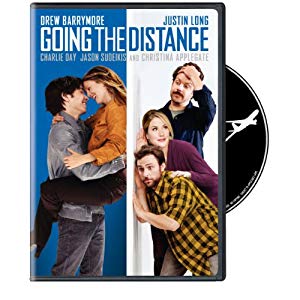
When I was writing GOING THE DISTANCE, I’d never been in a long-distance relationship (I am now, however, because the Universe has decided that my life is a cosmic irony). I had no idea what it was like. However, I had two things going for me: the Executive Producer HAD been, and I knew from personal experience what it was like to miss someone you loved.

Between those two things, I found my way there. Just because I’d never been in the situation doesn’t mean I couldn’t put myself in the EP’s shoes and determine how I’d react and how that would influence my significant other – and vice-versa. Then, I added in general stories from my own dating wins and losses (way more in the latter column, if you can believe it!) plus some funny personal experiences and ended up with something that I thought was as authentic as possible. I built a world, I assigned it rules that I understood, and I made it work.

I’m currently writing a spec about a Summer of my life that was very significant to me and, I think, one that others will either understand or commiserate with. That said, what happened in those three months in and of themselves isn’t enough to make a story – it’s something that began and ended, and there was some crazy stuff in between, that craziness alone doesn’t make for a good enough yarn. So I’m embellishing. I’ve stretched the timeline out to a year.  I added some extra drama with some of the characters that never happened. I added a narrative engine that COULD have existed in a worst-case scenario, but never did. I’ve pulled in experiences from years before or years after, events that didn’t happen in the same timeline but fit this story thematically. And you know what? It’s not only OK to do that, IT’S WHAT YOU’RE SUPPOSED TO DO. YOU’RE A WRITER, NOT A STATISTICIAN OR ARCHIVIST.

Know what else you’re supposed to do?

STOP BEING SELF-RIGHTEOUS AND PUT YOURSELF IN SOMEONE ELSE’S SHOES

This sounds simple, but it’s not, because you have to practice at a certain level of emotional and intellectual honesty to do so, and most aren’t willing to take that leap – not with characters, and not with settings, not with daily unscripted life. They write for what they wish to be and too often forget to understand what IS.

To be a writer, you have to be an observer, a cataloguer and a student of the human condition. You have to be willing to dissect it, reverse-engineer it, appreciate it, and get totally Frankenstein with it. Sometimes sexually.

You know yourself. Write yourself into your characters. Maybe not ALL of yourself ALL the time, because you’ll just keep writing the same movie. But parts of yourself in spurts and fits that matter. It keeps your story honest and it makes your characters relatable and accessible. Maybe that pang of jealousy you felt when someone got the promotion you were promised or the shame you felt when you slipped on the ice or the joy you felt when your first kid was born aren’t by themselves the beginnigs of an Oscar-winning script, but they can provide beautiful moments of clarity and authenticity for your audience through your characters.

You also know other people. And while you might never literally experience the pain of childbirth or the thrill of hitting a home run to win the World Series, you can, you know, TALK to people who’ve had kids and watch Joe Carter skip like a child around the bases. You’re a person. You’re supposed to be able to intuit and approximate the feelings of another person. You listen, you engage, and you process their history. It’s called empathy. And if you don’t possess the capability, you’re a sociopath and your very survival is predicated upon learning enough about human emotion to fake and convincingly replicate it, so you might even be better off.

You have to give the audience an excuse to INVEST IN YOUR STORY. You have to compel them to spend their time and open their hearts. That can only happen if they believe they can experience something worthwhile out of what you’re giving them. And the only way to forge that connection is to prove to them that you know. That you get it. That you’re telling THEIR story too.

But what if the sum total of all your experiences just isn’t enough?

RESEARCH IS YOUR FRIEND

Maybe, at the end of the day, it should be, “Write What You Can Learn”.

I’ve never been to Korea, but I’m currently writing a movie that’s set in Korea. The studio wasn’t going to pay to send me there because it’s not Hollywood in the 1990s anymore, so what were my options? I could have gone myself, but I’m not into 15-hour flights and didn’t want to spend an extended period of time abroad. So what then? Well, I immersed myself in research. For the first time ever, I’d be writing something I wasn’t intimately familiar with (or wasn’t made familiar with) on most levels. So all I could do was learn.

I spent three weeks going academically deep into Korea before even opened Final Draft. I continued to swallow up more information as I started to write the script. I talked to Koreans, native and otherwise. But that’s only the first part of it. The story is set in the music industry, so I had to build on what little I knew about that as well. The story is also populated mostly by women, so there was even more research to do on issues that affect Korean women specifically and Korean women in the Korean music industry more specifically. This is a PG-13 studio comedy we’re talking about here. I’m not trying to reinvent the wheel. But I still needed to understand. Because even if it’s just a PG-13 studio comedy, I want it to be a GREAT PG-13 studio comedy. So the strive for authenticity continues unabated.

And while that’s all a constant and continual learning process, I “know” enough about each of those things now that I can capably tell the story I want to tell. And I can lean on others that know far more than I do for the instances where I fall short of getting it right.

That’s a winding and solipsistic way of saying, “Probably don’t just wing it and hope for the best.” That never works. You end up with a script that’s cloying and fake and a story that’s – say it with me now – not worth telling. Because readers don’t invest in something that feels inauthentic.

And so, no, we can’t call it “Write What You Can Learn”. Because you don’t start writing something you CAN learn; you wait until you’ve learned it, then you write it. The maxim holds, but the explanation is clear: you can learn just about anything, to one degree or another, that you make a concerted effort to learn. But you have to decide to do that first. And most writers simply don’t.

SO…WHAT THE FUCK ARE YOU TALKING ABOUT HERE?

Yeah, look, it kind of seems like we went off the rails there, but we didn’t. Trust me. Here’s what it comes down to:

Not all stories are worth telling. In fact, pretty nearly all stories are not worth telling, even if (and maybe especially if) they happened to you. And your very first job as a writer is to recognize this fact and to develop the ability to discern what’s going to be entertaining and what’s not.

WWYK is a perfect piece of advice – as long as you understand what it means and know not to simply take it at face value. And then, once you understand it (and correctly value its sub-face!), you’ve got to apply it intelligently and appropriately. The major trick? Don’t be lazy. Do the work. Develop your instincts. Educate yourself. Improve yourself. Learn about others. Make an effort to understand them and how their experiences have shaped them. Expand your horizons. Be introspective. Be extrospective. Know when a story is not enough, and know when to let it go if you can’t MAKE it enough.

You know?


4 Comments
  • Page 2 of 12
  • «
  • 1
  • 2
  • 3
  • 4
  • 5
  • »
  • Last »

STUFF

  • YOU GO MAKE ME RESIDUALS YOU GO MAKE ME RESIDUALS

@DrGMLaTulippe

  • RT @LukeBarnett: In bathroom blowing my nose. Just witnessed man walk in, wash his hands, dry his hands, walk into stall and pee, then walk… 2 years ago

  • Jeepers. https://t.co/OtiGZ2XFVj 2 years ago

  • RT @JoshMalina: This is how @WhitfordBradley declines an invitation. He’s a prince. https://t.co/FosWn8RC7W 2 years ago

  • @littleredyarn @helenshang No one he won't fire for it, anyway. 2 years ago

  • @helenshang I'm pretty husky and rather privileged to have a great tailor who taught me these things early. @littleredyarn 2 years ago

  • When ever week is Infrastructure Week, no week is Infrastructure Week. https://t.co/zizOPytpfQ 2 years ago

  • @littleredyarn And, for 99.99999% of people, it doesn't matter, right? But...the President is only the most consist… https://t.co/sS3nDPaac6 2 years ago

  • @littleredyarn But you'd be *shocked* how many guys like Trump think, "Man, if I just go a size bigger, that'll hid… https://t.co/Npm45LP9X2 2 years ago

  • @littleredyarn Yes! But it almost *never* works with dudes. It makes you look childlike and absurd to not wear a fi… https://t.co/gget4f1MpI 2 years ago

  • @helenshang I think the photo was altered to make the suit look even baggier and his hands smaller (giggle), but ye… https://t.co/DWAbM8tVm8 2 years ago

View more tweets

September 2020
S M T W T F S
« Jun    
 12345
6789101112
13141516171819
20212223242526
27282930  

©2012-2018 The Official Home of Mediocre Screenwriter Geoff LaTulippe | Powered by WordPress with Easel | Subscribe: RSS | Back to Top ↑